
South Florida Commercial Real Estate Market
The premier tri-county commercial real estate market in the Southeast — Miami-Dade, Broward, and Palm Beach. Institutional-grade opportunities across office, retail, industrial, multifamily, hospitality, and mixed-use.
By Ryan Solberg · FL Real Estate Broker License BK3354351 · Last updated October 2026
6.3M+
Tri-County Pop.
3
Counties
Yes
Global Gateway
Premium
Outlook
South Florida: The Southeast's Gateway CRE Market
South Florida — encompassing Miami-Dade, Broward, and Palm Beach counties — is one of the most dynamic and globally connected commercial real estate markets in the United States. With a tri-county metro population exceeding 6.3 million, the region combines the scale of a top-10 US metro with the international capital flows, cultural diversity, and high-growth demographics that define a global gateway city. For commercial real estate investors, South Florida offers access to some of the strongest fundamentals and deepest buyer pools in the country.
The region's economy has transformed dramatically over the past decade. What was once primarily a tourism and real estate market has evolved into a diversified economic powerhouse spanning finance, technology, healthcare, logistics, and international trade. Miami has emerged as 'Wall Street South,' with major financial firms including Citadel, Elliott Management, Blackstone, and Ken Griffin's relocation of Citadel headquarters from Chicago. The tech sector has expanded substantially, with blockchain, fintech, and venture capital firms establishing Miami as a primary or secondary headquarters.
South Florida's demographic profile is distinctive. Domestic in-migration from the Northeast and West Coast, combined with continuous international migration from Latin America and Europe, has driven sustained population growth and wealth creation. Florida's tax environment — no state income tax, favorable estate planning treatment — has accelerated the region's capture of high-net-worth residents and capital.
Tri-County Market Characteristics
Miami-Dade County is the largest and most dynamic of the three counties, with a population of approximately 2.7 million and a commercial real estate market dominated by Miami, Miami Beach, Brickell, Wynwood, Doral, and Coral Gables. The market profile is defined by international capital, luxury residential, premier hospitality, and one of the strongest industrial and logistics markets in the country driven by PortMiami and Miami International Airport.
Broward County, home to Fort Lauderdale, Hollywood, Pompano Beach, Sunrise, and Plantation, offers a more affordable entry point than Miami-Dade with strong office, industrial, and multifamily fundamentals. The county has become the logistics hub of South Florida, with Port Everglades and the Fort Lauderdale-Hollywood International Airport supporting major distribution and e-commerce activity.
Palm Beach County — anchored by West Palm Beach, Boca Raton, Delray Beach, Jupiter, and Palm Beach Gardens — has emerged as one of the fastest-growing wealth management and corporate relocation destinations in the country. The Flagler Drive corridor in downtown West Palm Beach has attracted Goldman Sachs, Citadel, Point72, Elliott Management, and Vornado Realty Trust expansions. Boca Raton continues to anchor a mature office and corporate campus market.
Key Commercial Property Types in South Florida
Office investment in South Florida spans a range of strategies and geographies. Class A office rents in downtown Miami and Brickell have reached record highs, driven by financial services and tech tenants seeking prime urban locations. Palm Beach County has become the nation's most active office relocation market, with institutional-quality buildings along Flagler Drive commanding premium rents. Fort Lauderdale and Boca Raton offer more attainable Class A options with strong long-term demand fundamentals.
Retail fundamentals across South Florida are exceptional. Luxury retail in Worth Avenue (Palm Beach), Lincoln Road (Miami Beach), Bal Harbour Shops, and Miami Design District commands some of the highest retail rents in the country. Grocery-anchored and neighborhood centers across the tri-county region benefit from dense population, high household incomes, and sustained consumer spending. NNN retail with national credit tenants remains highly sought after and trades at cap rates that reflect the region's institutional demand.
Industrial and logistics properties are among the strongest-performing assets in South Florida. PortMiami, Port Everglades, and Miami International Airport together create one of the densest logistics ecosystems in the country. Airport West / Doral, Hialeah, Medley, Pompano Beach, and the I-95 corridor anchor a supply-constrained industrial market with some of the lowest vacancy rates nationally. Airport-adjacent industrial in Doral has become a favored allocation for institutional core investors.
Multifamily investment remains a dominant sector across South Florida. Class A urban-infill multifamily in Brickell, Edgewater, downtown Miami, Wynwood, and downtown Fort Lauderdale has absorbed at a pace that justifies continued development. Workforce housing and Class B multifamily across Broward and Palm Beach offer value-add investors meaningful rent growth opportunities.
Hospitality is a signature investment category in South Florida. Miami Beach, South Beach, Key Biscayne, Fort Lauderdale Beach, and Palm Beach anchor a world-class hospitality market. Luxury hotel performance has consistently ranked among the top markets nationally, and independent boutique hotels have captured significant investor interest.
South Florida Investment Outlook
South Florida enters 2026 as one of the most institutionally attractive CRE markets in the United States. The region has fully transitioned from a recovery market to a structural growth market, with fundamentals across every property type supporting premium pricing and continued rent growth. Cap rates across South Florida are among the tightest in the country, reflecting the region's demographic strength, international capital flows, and institutional buyer demand.
The Brightline high-speed rail service connecting Miami, Fort Lauderdale, West Palm Beach, and Orlando has created transit-oriented development nodes that are reshaping the commercial investment landscape. Properties within walking distance of Brightline stations benefit from accessibility premiums and attract both residential and commercial tenants who value connectivity across the tri-county region.
For investors, the primary challenge in South Florida is not finding demand — it is sourcing deals at pricing that delivers target returns. Off-market transactions, relationships with developers and family offices, and deep submarket knowledge are increasingly essential. The region rewards investors with long-term holding discipline and penalizes those who chase cap rate compression at the top of the cycle.
Each of the three counties offers a distinct investment profile. Miami-Dade provides access to the most liquid urban core market in the region. Broward offers logistics and workforce housing fundamentals at more attainable pricing. Palm Beach is the nation's most active wealth-management corridor and offers an institutional-quality office market with meaningful growth upside. Investors allocating to South Florida typically build positions across all three counties to capture the full opportunity set.
Tri-County Fundamentals From Official Sources
The table totals and compares Miami-Dade, Broward, and Palm Beach counties using Census Bureau, BLS, and port-authority publications. Each line shows its source link and as-of date. None of it is pricing or yield data.
Tri-county population
6,391,072
Miami-Dade 2,802,029; Broward 2,013,317; Palm Beach 1,575,726. The 2024 sum was 6,399,981, so the three counties together were about 0.1% lower.
Source: U.S. Census Bureau, Vintage 2025 County Population Estimates
Link: https://www2.census.gov/programs-surveys/popest/datasets/2020-2025/counties/totals/co-est2025-alldata.csv
As of: July 1, 2025
Nonfarm jobs, Miami-Fort Lauderdale-West Palm Beach metro
2,965,600
Miami division 1,347,800; Fort Lauderdale division 915,100; West Palm Beach division 702,700. September 2025 was 2,952,600, a gain of about 0.4%.
Source: U.S. Bureau of Labor Statistics, Current Employment Statistics (metro area)
Link: https://www.bls.gov/sae/
As of: September 2026 (preliminary, not seasonally adjusted); retrieved Oct 30, 2026
Apartment permits (5+ unit buildings), three counties
16,699 units
Authorized in 2025: Miami-Dade 13,292, Broward 1,904, Palm Beach 1,503. Miami-Dade accounted for about 80% of the total.
Source: U.S. Census Bureau, Building Permits Survey (county, annual 2025)
Link: https://www2.census.gov/econ/bps/County/co2025a.txt
As of: Calendar year 2025
Port Everglades cruise guests and containers
4,773,873 / 1,167,552 TEUs
The port reports both as records, with cruise guests up 16% on the prior year.
Source: Port Everglades, Port Everglades Shatters Its Own Records (Dec 5, 2025)
Link: https://www.porteverglades.net/articles/post/port-everglades-shatters-its-own-records/
As of: Fiscal year 2025, preliminary (Oct 1, 2024 to Sep 30, 2025)
PortMiami containers
1,115,058 TEUs
Up 2.35% from 1,089,443 TEUs in fiscal 2024, according to Miami-Dade County.
Source: Miami-Dade County, PortMiami announces a banner year (Dec 2, 2025)
Link: https://www.miamidade.gov/global/release.page?Mduid_release=rel1764622080449470
As of: Fiscal year 2025 (Oct 1, 2024 to Sep 30, 2025)
Figures are reproduced as published; the tri-county sums are our arithmetic on the published county figures. BLS monthly estimates are preliminary and can be revised. This page has no MLS feed coverage for these counties, so no listing counts, medians, or cap rates are shown.
Property Types in South Florida
Class A Office
Retail & Luxury Retail
Industrial & Logistics
Multifamily & Mixed-Use
Hospitality
NNN Investments
Why Invest in South Florida
Top-10 US metro with international capital flows and global gateway demographics
Miami has become 'Wall Street South' with Citadel, Blackstone, and Elliott expansions
Palm Beach corridor is the nation's most active office relocation market
PortMiami, Port Everglades, and Miami Airport anchor supply-constrained industrial
Zero state income tax continues to drive high-net-worth domestic in-migration
Brightline high-speed rail creates transit-oriented development across tri-county region
South Florida Market Spotlight Video
Get South Florida Deal Alerts
Be the first to know about commercial real estate opportunities in South Florida. Sign up for off-market deal access.
Market Insights
Research and analysis for commercial real estate investors
South Florida Cap Rates by Property Type
Current cap rate ranges for retail, office, industrial, multifamily, and NNN properties.
Orlando Commercial Real Estate Trends 2026
Cap rates, submarkets, and investment strategies across the Orlando metro.
Entertainment District Investment Guide
Disney, Universal, and I-Drive corridor opportunities for CRE investors.
Brevard County Investment Outlook
Space Coast growth drivers and commercial real estate opportunity areas.
Live Commercial Listings in South Florida
Active commercial inventory in South Florida — for sale, live from Stellar MLS.
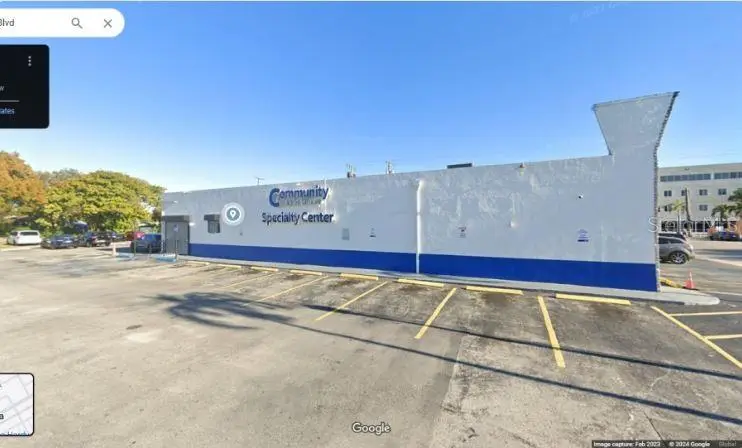

$2.80M
321 Opa Locka Blvd
Opa Locka, FL 33054
6,425 SF · 0.5 ac · Built 1953
Opa Locka 02 Rev 02
MLS #O6254372, KELLY RIGHT REAL ESTATE.
Listing provided by Stellar MLS
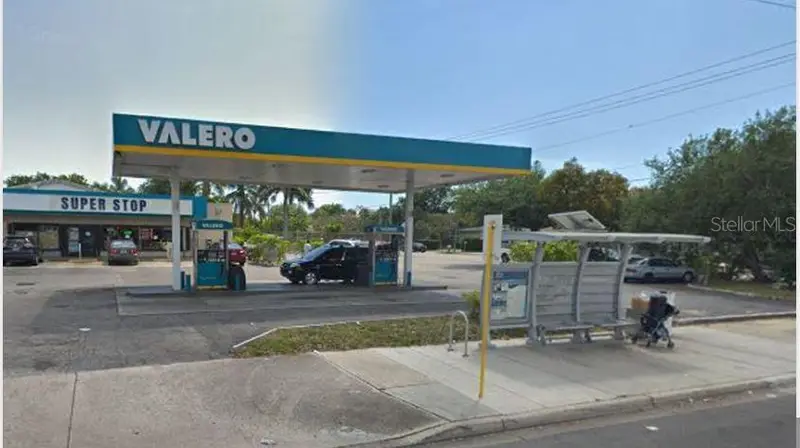
$2.80M
1900 Nw 9th Ave
Fort Lauderdale, FL 33311
3,910 SF · 0.52 ac · Built 1984
Argonne Heights Amd Place 16-8 B
MLS #O6254392, KELLY RIGHT REAL ESTATE.
Listing provided by Stellar MLS
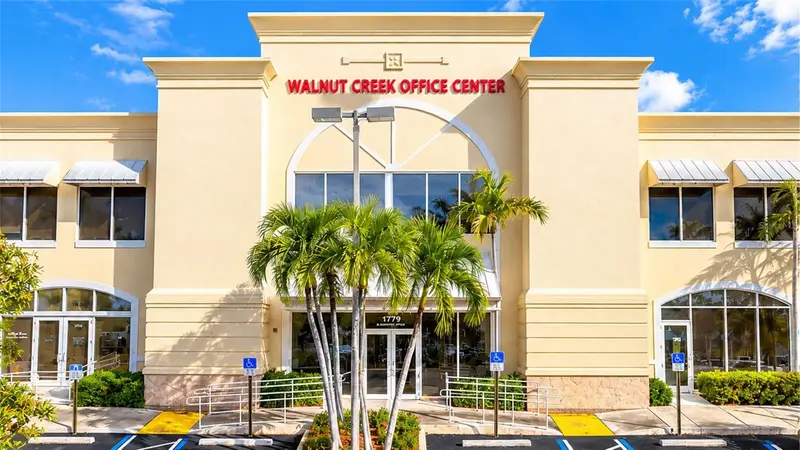
$2.70M
1779 N University Dr #101
Pembroke Pines, FL 33024
5,285 SF · 0.58 ac · Built 2006
Professional Center At Walnut
MLS #S5160527, VESTI LLC.
Listing provided by Stellar MLS
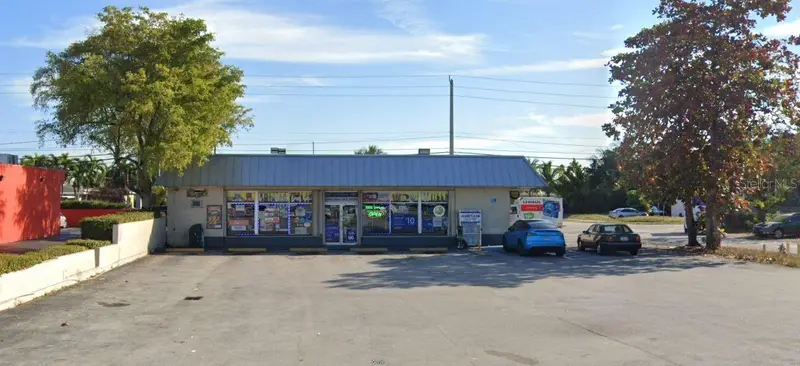
$2.50M
19301 Nw 2nd Ave
Miami, FL 33169
3,503 SF · 0.38 ac · Built 1956
Sierra
MLS #O6254374, KELLY RIGHT REAL ESTATE.
Listing provided by Stellar MLS
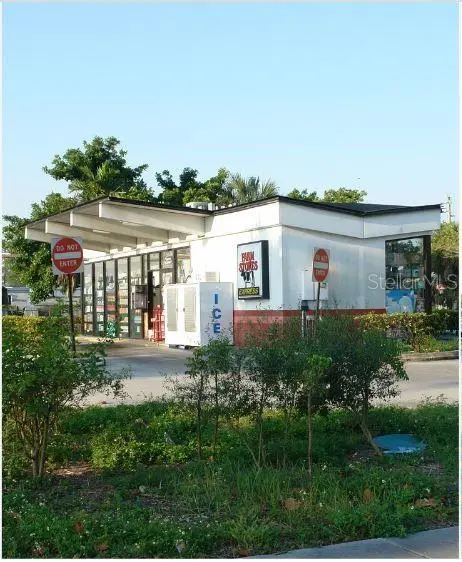
$2.50M
4050 Sw 21st St
Fort Lauderdale, FL 33317
1,314 SF · 0.76 ac · Built 1996
M & I 135-4 B
MLS #O6250620, KELLY RIGHT REAL ESTATE.
Listing provided by Stellar MLS
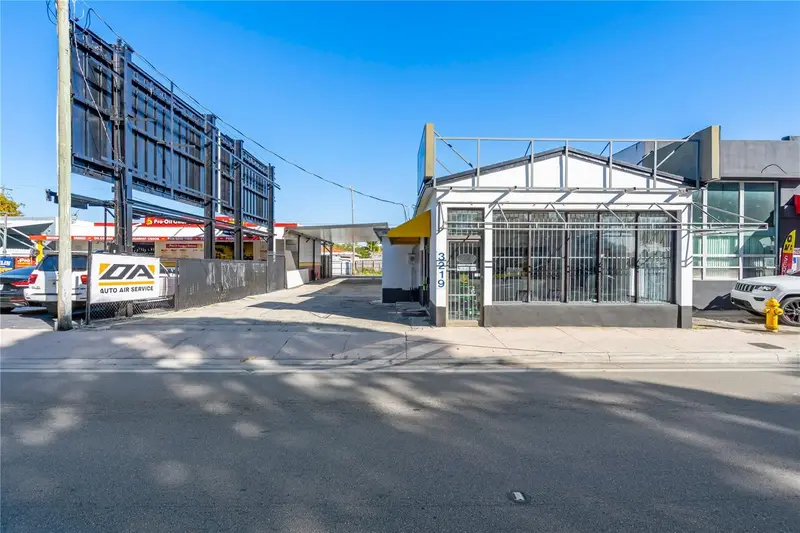
$1.57M
3219 Sw 8th St
Miami, FL 33135
1,822 SF · 0.13 ac · Built 1937
Auburndale Tamiami Trail Add
MLS #A4692598, CARCAMO REALTY GROUP.
Listing provided by Stellar MLS
Listings courtesy of Stellar MLS as distributed by MLS GRID. Data deemed reliable but not guaranteed.
South Florida Commercial Real Estate FAQs
Is South Florida commercial real estate a good investment?
South Florida is the most institutionally competitive CRE market in Florida — highest entry prices, tightest cap rates, deepest buyer pools. The tri-county metro (6.3M+) benefits from international capital flows, 'Wall Street South' financial tenant demand, and supply-constrained industrial at PortMiami and Port Everglades. Returns are driven by NOI growth and rent expansion, not cap rate compression. Long-hold discipline rewards investors who don't chase the cycle top.
What are cap rates in South Florida commercial real estate?
South Florida commands the tightest cap rates in Florida: Class A urban office 4.5–5.5%, industrial/logistics 4.0–5.5% (core Doral product below 5%), multifamily 4.0–5.0%, NNN retail 5.0–6.5%. Palm Beach corridor Class A office has traded near 4.5%. Luxury retail in Brickell and the Miami Design District implies 3.5–4.5% yields.
Which South Florida county is best for commercial real estate investment?
Each county has a distinct profile. Miami-Dade: highest prices, deepest liquidity, international capital, supply-constrained Doral industrial. Broward: more attainable entry point, Port Everglades logistics, workforce housing multifamily. Palm Beach: fastest-growing wealth corridor, active office relocation market, Flagler Drive institutional profile. Diversifying across all three captures the full South Florida opportunity.
Where can I find commercial property for sale in South Florida?
Active Miami-Dade, Broward, and Palm Beach commercial listings from Stellar MLS appear in the live listings section of this page. Many South Florida trades are off-market, so share your asset class, budget, and target cap rate and we will search both.
Is Broward or Miami-Dade a better entry point for industrial investment?
Broward offers a more affordable entry point than Miami-Dade, with Port Everglades and Fort Lauderdale-Hollywood International Airport supporting logistics demand. Miami-Dade, anchored by Doral and Airport West, is the tighter and more expensive industrial market, with core product priced below a 5% cap rate.
South Florida Specialist
Ready to Invest in South Florida?
Schedule a free consultation with our South Florida commercial real estate team.
South Florida Investment Consultation
Tell us your investment goals and we'll identify the right South Florida opportunities for you.